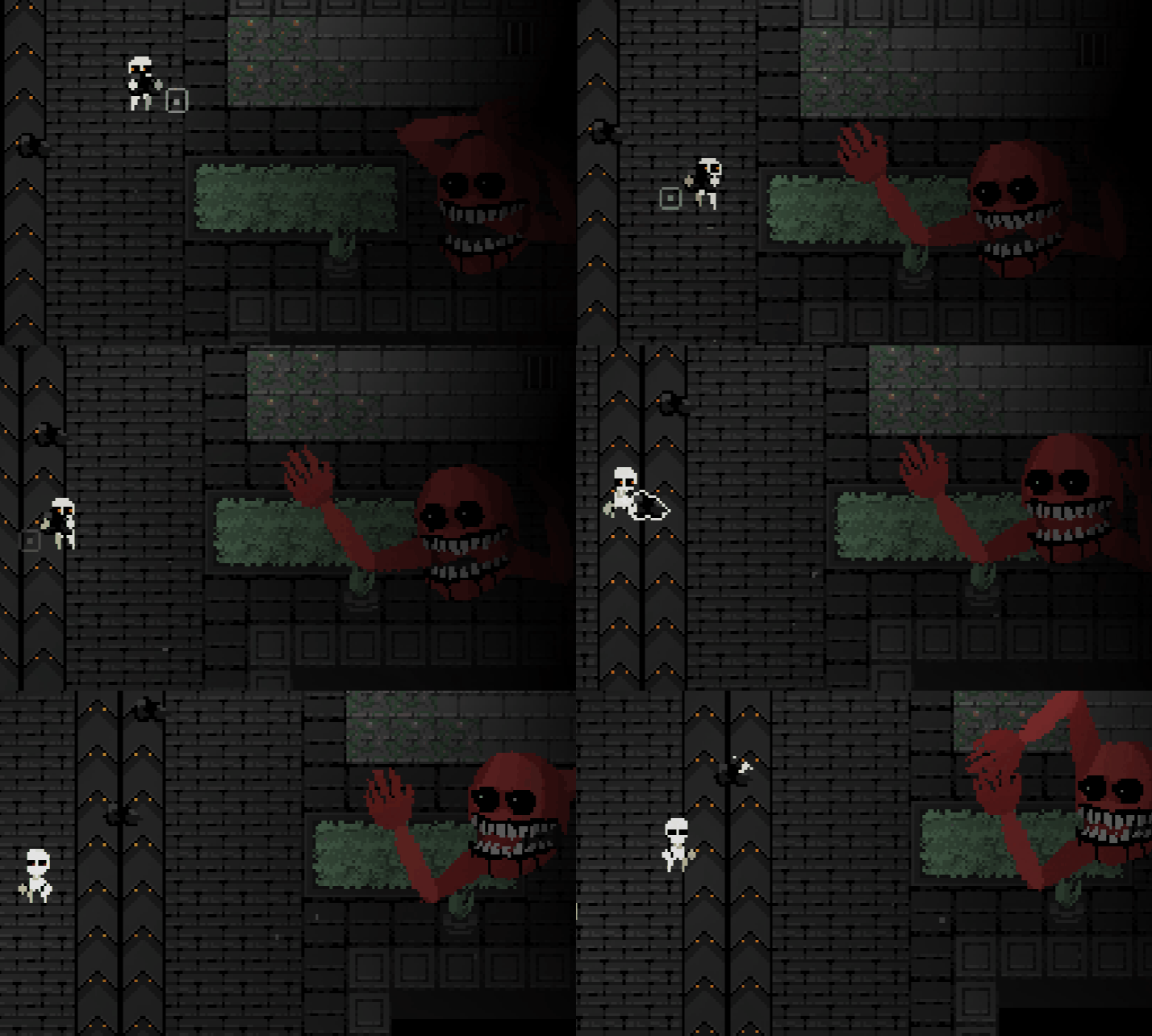
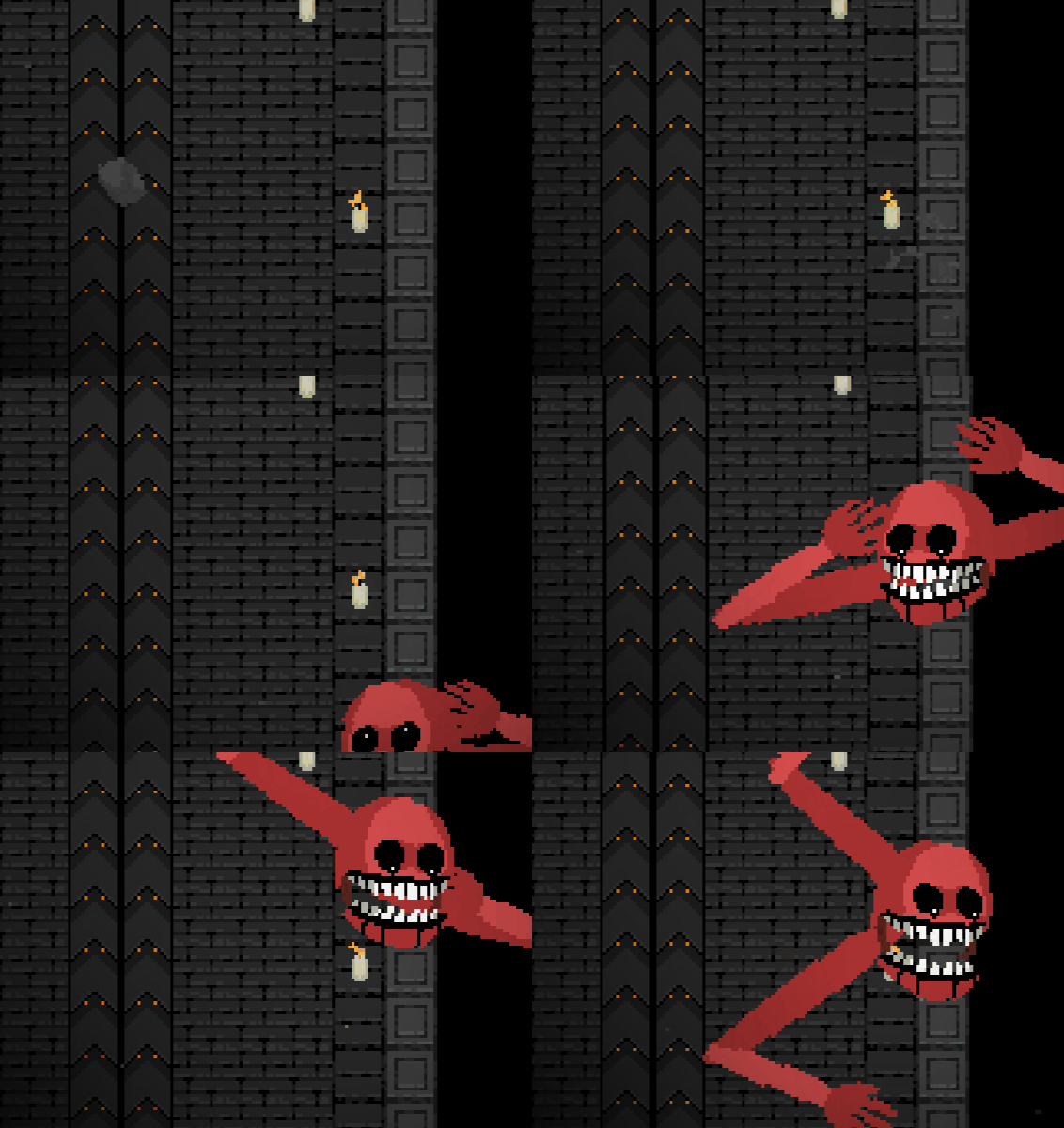
Coal
Keeps the furnace and light economy alive. Do not ignore it when the dungeon gets dark.
Wiki
A compact wiki page for players who want the factual version of Cobb Can Move: what it is, how the rule system works, what items matter, and where to play.

Reference
| Topic | Wiki note |
|---|---|
| Creator | abho, with collaborators credited for programming, sound, music, and testing |
| Engine and tools | Official page lists Construct, Aseprite, Audacity, and FL Studio |
| Genre | Survival horror with roguelite and procedural generation elements |
| Current version | Official page now lists COBB CAN MOVE v1.7 webview2.zip as the Windows download |
| Modes | Story Mode has seven levels; level select unlocks after beating the game once |
| Recent update | v1.7 nerfed Cobb Can Smell and fixed rock stuns during pursuit; v1.6 improved rocks, AZERTY-style keyboard support, and ending collision |
| Inputs | Keyboard and gamepad |
| Main objective | Survive, manage resources, activate systems, and escape Cobb |
Items
Keeps the furnace and light economy alive. Do not ignore it when the dungeon gets dark.
Matter most when the active rule creates a window to fight back or power progress.
Useful for noise, route control, and direct-hit stuns in current builds.
Important when scent tracking is active; v1.7 makes smell less persistent but not irrelevant.
Rule index
| Rule | What changes | Player response |
|---|---|---|
| Cobb Can Move | Cobb patrols and actively pressures the dungeon. | Plan loops before carrying coal or batteries. |
| Cobb Can Hear | Noise can pull Cobb toward your path. | Use rocks and route changes to create distance. |
| Cobb Can See | Line of sight becomes dangerous in open spaces; recent updates adjusted its range. | Break sightlines with corners, use darkness carefully, and avoid exposed halls. |
| Cobb Can Smell | Scent tracking punishes predictable hiding, though v1.7 made sniffs less frequent and close-range scent persistence lower. | Use deodorant when available, keep distance, and avoid repeating routes. |
| Cobb Can Extend | Cobb can reach farther than expected. | Keep extra space before committing to interactions. |
| Cobb Can Duplicate | More than one Cobb can threaten the map. | Map exits first and keep a fallback path ready. |
| Cobb Can Die | For a brief rule shift, Cobb can be fought back. | Collect batteries and switch from pure stealth to offense. |
| Freeze or Hunger | Environmental pressure drains safety over time. | Prioritize objectives instead of over-exploring. |
Wiki depth
A Cobb Can Move wiki page should not be a generic game summary. Players come to a wiki-style page after they have seen rule names, item names, modes, or comments about the game and want organized answers. The page should explain the developer, platform, genre, inputs, objective loop, items, rules, and mode structure in one place. It should also be clear that this is an independent reference page, not the official developer wiki.
The most important mechanic is the changing rule system. Cobb is not just a monster moving through a map. Cobb’s capabilities shift, and those shifts change how the player should route, hide, carry resources, and decide when to leave. A wiki page must therefore make the rule table easy to scan. It should help the player move from “what does this rule mean?” to “what should I do differently?” in a few seconds.
Coal, batteries, rocks, and deodorant should be described by what they let the player survive, not only by their names. Coal is tied to the light economy and the furnace route. Batteries matter when progression or a specific offensive window requires power. Rocks are useful because they can manipulate attention and buy space. Deodorant matters because scent tracking changes whether hiding is safe. These details help the wiki page answer gameplay intent, not just index terms.
The objective loop is also worth spelling out. Explore the procedural layout, identify the furnace and breaker, understand the active rule, collect resources, avoid or redirect Cobb, then move toward escape. The loop sounds simple until a new rule undermines the previous plan. That is why the game creates so much search demand: players want to identify the rule, understand the counter, and improve the next run.
Story Mode is the better first stop because it introduces pressure in a more readable sequence. Endless Mode is for replayability, comparison, and high-pressure routing. A wiki page can connect those modes without overexplaining unknown lore. The safe framing is that Story Mode teaches the rule language while Endless Mode tests adaptation and consistency.
Because this page targets a wiki keyword, it should be updated whenever official information changes. If a rule is renamed, a new mode appears, or a platform is added, the wiki page should reflect the official source. That gives the page a reason to rank beyond word count. It becomes a maintained reference that connects searchers to the playable page and to the developer listing.
Source-informed notes
The official discussion reveals useful wiki topics that are not always obvious from a short store description. Players ask about endless levels, challenge ideas, late-level difficulty, smell tracking, duplication, and whether Cobb must be baited into hazards. Those topics should become maintained notes over time. They should be written as guidance, not copied from comments, and they should be checked against future developer updates.
A good wiki page can therefore combine three layers: official facts, gameplay explanations, and community-observed pain points. That combination is stronger than a generic facts table because it answers the questions players actually search after losing a run.
The page should also keep a clean distinction between confirmed information and player interpretation. If a tactic comes from community experience, describe it as a practical tip rather than an official rule.
FAQ
No. It is an independent reference page that points players toward the official itch.io page.
The changing rule system. Cobb can gain new detection and movement behaviors, forcing the player to adapt each level.
It is a survival horror roguelite with top-down pixel art and procedural elements.
Official source
CobbCanMove.top is an independent play and guide site. For the developer listing, credits, devlog, and official download, use abho's itch.io page.